A handwriting journey: from mistakes to growth
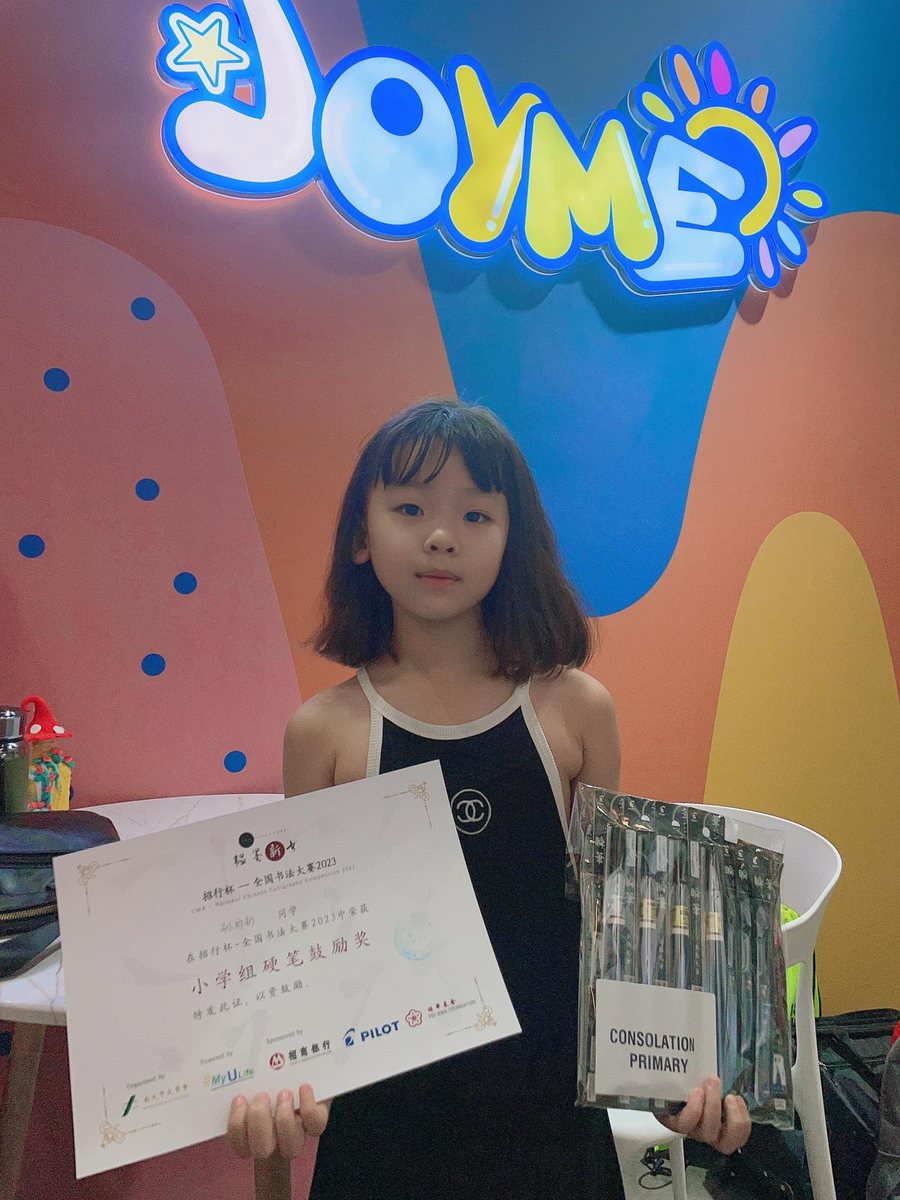
Sun Yuchu (age 8)
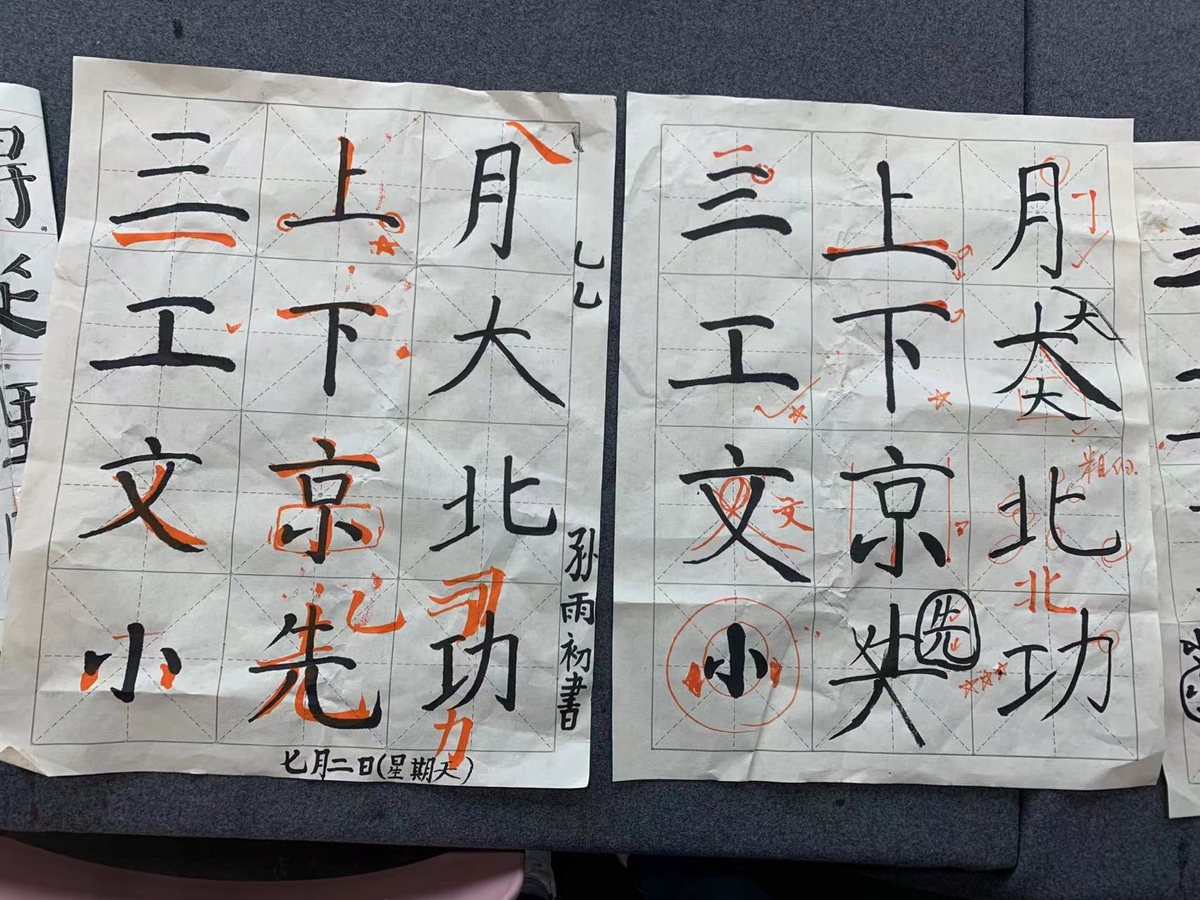
From a young age, my child never had a correct pen grip. How she held the pen, how she sat, her stroke order and her strokes were all her own invention. She grew up with her grandparents, and when she started writing she was taught to make every stroke “flat and straight”, which is very hard to unlearn for pen calligraphy. I have always felt that if you learn any skill correctly from the start, you save most of the time you would otherwise spend fixing mistakes later. What children take in is a double-edged sword: if it is all correct, it helps them a great deal as they learn to write; if it is wrong, bad writing habits form very easily. The same goes for art and for sport. Luckily, we found the problem before it was too late, and corrected her writing habits and awareness in time.
Yuchu is eight this year and has had about a dozen calligraphy lessons so far. I feel that practising writing makes a person calm and composed. Calligraphy needs focus: you can only write a good character stroke by stroke, and in that atmosphere you gradually settle down. Even a small amount of practice each week builds a calm, unhurried state of mind and frees you from restlessness. Calligraphy is also very precise work. To write well, you have to concentrate fully, stay calm, study each character's structure closely, and coordinate mind, eyes and hand. Over time this quietly shapes a child's temperament and builds a steady, composed habit. Learning calligraphy helps children become careful, focused, calm and persistent learners.
Screens and gadgets are everywhere today. Rather than let children get hooked on games and videos, parents should find ways to get them interested in other things. So I started learning brush and pen calligraphy together with my daughter, with her as my teacher. The strokes she learns in calligraphy class, she teaches me again at home, and it gives her a great sense of achievement. The encouragement from her teachers in class matters even more: she has found a confidence that is truly precious. She often tells me: “Mum, I'm not the best at my studies, but my handwriting is the best in my whole year!” Hearing this always moves me. How rare it is that writing can make my child so happy and proud.
In her dozen or so lessons at JOYME, she also took part in the national calligraphy competition and learned a lot from it. When she saw that her work was not hung up on the prize board, she went off to one side and quietly wiped away her tears. Through calligraphy, my girl has grown up. She has learned about pride and disappointment, winning and losing, and that effort brings its rewards.
Before long, with her teachers' help, I believe my daughter will thank her mum for making her keep up calligraphy, and thank herself for all her hard work!
The original, in Chinese 雨初的习字之旅
孙雨初(8岁)
孩子从小就没有一个正确的握笔姿势,执笔、坐姿、笔顺、笔画全都是自由发挥,由于在外公外婆身边长大,开始写字的时候就是被教导「横平竖直」这对硬笔书法来说很难改掉。我始终觉得学任何一种技能如若起初就是正确的,那么后序会省掉大部分改错的时间,这些知识和信息其实就像一把双刃剑,如果孩子接收的都是正确的信息,那是对孩子的后面学写字是很有利的;一旦是错的,那就很容易形成一些不良的书写习惯。无论是艺术类或是体育竞技类亦是如此。还好发现问题并不算晚,继而及时纠正孩子对书写的习惯和意识。
雨初今年八岁,开始写书法大概十几节课的时间。我觉得习字可以使人怡静从容,练习书法时需要集中注意力、一笔一划才能写好字,并逐渐在这种氛国中静下心来;每周只要有一小部分的时间进行书法练习,那么这一小部分的时间就能培养怡静从容的情绪,从浮躁的情绪中解脱出来。书法也是一项十分精细的活动,要想把字写好,需全神贯注,凝神静气,仔细观察字的结构,并要脑、眼、手相应,这样久而久之能潜移默化的改变孩子的心理素质,养成沉着镇静的习惯。通过学习书法,能促进孩子养成细致、专注、沉着、持久的学习品质。
当今社会的电子产品日益丰富,孩子与其沉迷于游戏、刷视频,家长更应该想个办法让孩子对其他事物感兴趣,继而我跟孩子一起学习书法和硬笔书法,我拜她为师,她在书法班学习的笔画回到家再教我写一遍,她十分有成就感,在班上老师的鼓励更为重要,孩子找到了难能可贵的自信。经常对我说:“妈妈我学习不好,可是我的字是我们全学年最好的呢!”听到这些不由得感动,习字能令我的孩子快乐自豪那是多么的难得。
在JOYME学习的十几节课里,孩子还参加了全国的书法比赛,学到很多经验,看自己的作品没有被挂在大奖栏里展示,竟然到一旁偷偷的抹眼泪,因为学习书法,我的女孩她长大了,知道了荣辱和得失,懂得了努力和收获。
在不久的将来,在老师们的帮助下,相信女儿一定会感谢妈妈坚持让她学习了书法,也会感谢不断努力的自己!
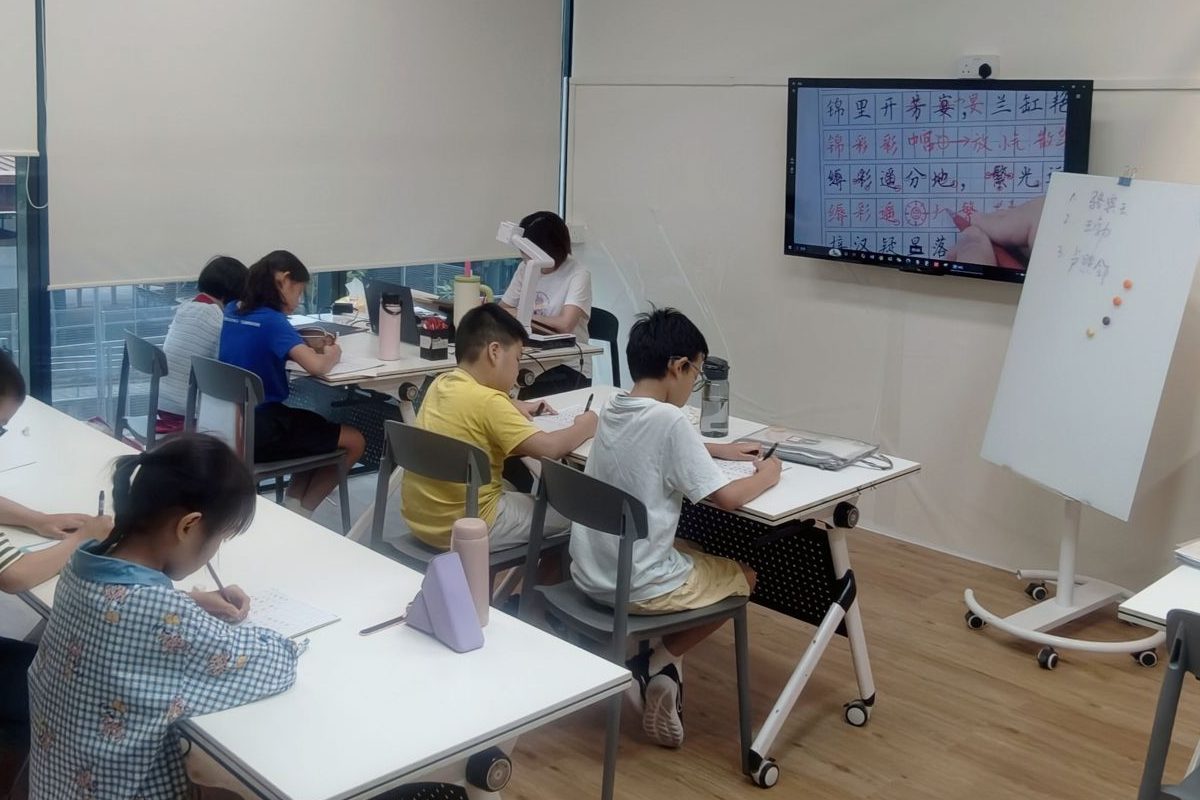
Chinese calligraphy with pen and brush
Pen practice follows the word lists of the 欢乐伙伴 textbook used in Singapore primary schools.